
Freemium vs Paid Mobile App Models
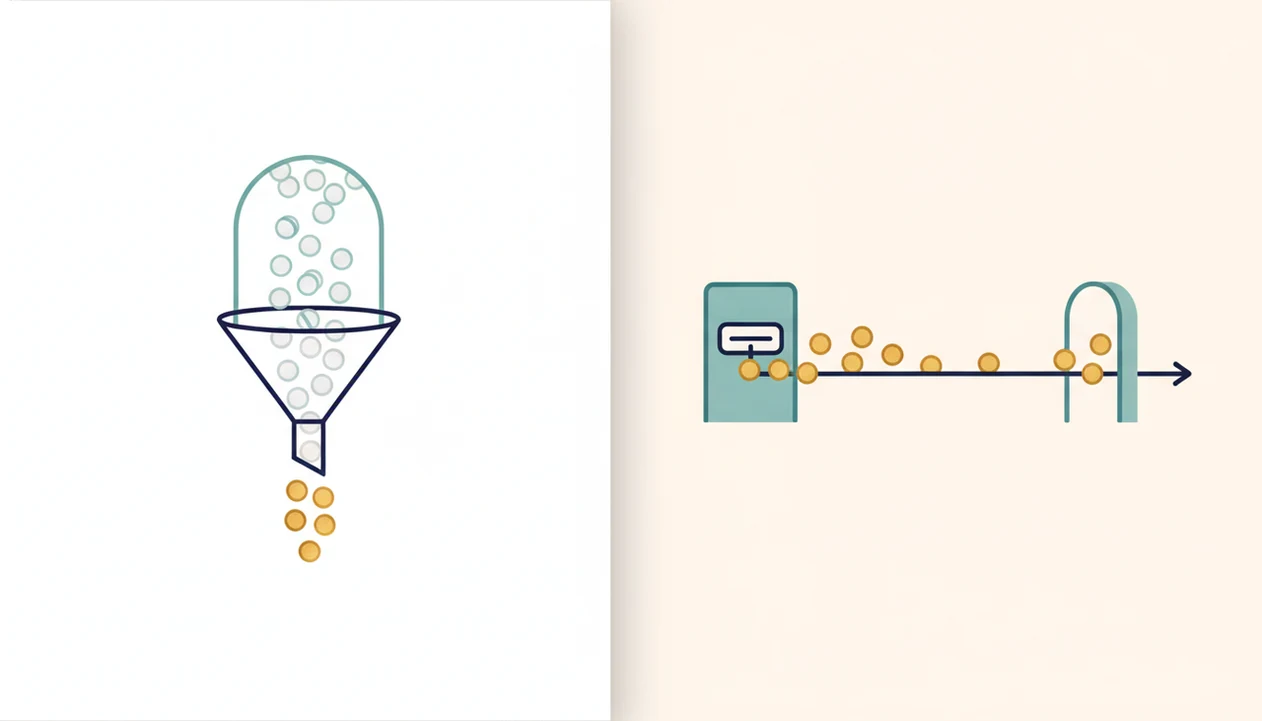
freemium vs paid app models usually comes down to reach versus commitment: freemium wins when an app needs discovery, usage data, and a conversion funnel, while paid wins when the value is obvious enough for users to buy before trying. Power Themes treats the choice as a product and distribution decision, not a pricing slogan. Most teams should choose based on category, cost to serve free users, trust signals, and the strength of the upgrade path, not on download volume alone.
> A freemium app is free to download with optional paid upgrades, while a paid app requires an upfront purchase before users can access the core product.
- Freemium tends to produce more installs, more reviews, and more optimization data, but only a small share of users usually convert to paid.
- Paid apps tend to produce fewer downloads but more committed users, clearer unit economics, and less free-user support burden.
- The best model depends on category, acquisition channel, app store competition, infrastructure cost, privacy expectations, and whether the product improves through repeated use.
Freemium vs paid mobile app models, side by side
Side-by-side captures of the compared products. Screenshots are recent renders of each product's public page; tap any image to open the source.
Freemium vs paid app models at a glance
Freemium means free download plus optional upgrades, subscriptions, in-app purchases, ads, or feature unlocks. Paid means the user pays before download and usually gets the core product immediately.
| Decision area | Freemium model | Paid model |
|---|---|---|
| Downloads | Usually higher because entry is free | Usually lower because payment comes first |
| Conversion | Requires activation, paywall design, and repeated value | Conversion happens before install |
| Revenue timing | Delayed, often through upgrades or subscriptions | Immediate at purchase |
| Support burden | Higher if free users need help | Lower, with fewer casual users |
| Trust barrier | Lower at install, higher at monetization | Higher before install |
| App store discovery | More install and review opportunities | More dependent on listing credibility |
Freemium is not automatically better. It is better when scale, retention, upgrade demand, and cost control are realistic. We have seen teams stare at competitor screenshots tiled across the screen, then mistake “free” for strategy.
The screenshot grid lies sometimes.
How freemium and paid app models work
Freemium and paid models work by moving the trust moment to different places in the funnel. Freemium earns trust after install through product use, while paid has to earn it in the store before the user can try the core experience.
- Track the freemium path from install to activation, then to a paywall, conversion, renewal, and retention. Activation means the first useful moment, not just account creation.
- Build the paid path from store impression to proof, purchase, refund risk, and retention. Proof can be screenshots, reviews, demos, press, or a very clear promise.
- Compare trust timing carefully: freemium reduces install friction but must justify payment later; paid increases install friction but can attract more committed buyers.
- Monitor weekly metrics by model. Freemium needs installs, activation rate, paywall views, conversion, churn, ARPU, support load, and free-user cost. Paid needs impressions, product-page conversion, refunds, ratings, revenue, retention, and support tickets.
- Place hybrids between the two: free download with subscriptions, trials, paid unlocks, credits, or a low upfront price plus optional upgrades.
Five freemium and paid app model facts teams should know
These five facts help separate store reality from pricing folklore. Power Themes uses them as a starting checklist before comparing models in a submission plan.
- Free-to-download apps dominate consumer app store spending, but that does not mean every free app is profitable; Apple-commissioned App Store commerce reporting has repeatedly shown free-to-download apps driving most App Store commerce and monetization activity (Apple).
- Subscriptions are a major spending driver and often pair with freemium or hybrid models; Sensor Tower reported subscription apps as a major share of non-game app revenue growth in 2023 (Sensortower).
- Freemium is a product-led growth and customer acquisition system, not just a cheaper price point.
- Paid apps can still work for professional tools, utilities, niche B2B, and categories where the value is obvious before install.
- Privacy and data-use concerns can weaken trust in free or ad-supported models; Pew Research Center reported in 2022 that 72% of U.S. adults sometimes avoided digital products because of data-collection concerns (Pew Research Center).
Good independent guides deliver store-aware tradeoffs, not download-volume cheerleading.
How freemium app models work behind the download
A freemium app works as a funnel: acquisition, activation, habit formation, paywall exposure, conversion, retention, and expansion. The free plan is the front door, but the paid boundary is the business model.
A paid app moves that conversion moment before install: the store listing, screenshots, ratings, demo assets, and refund expectations have to do the persuasion before the user touches the product. That is why paid models depend more heavily on pre-purchase proof, while freemium models depend more heavily on activation and upgrade timing.
That boundary can be a feature limit, usage cap, content gate, ad removal offer, collaboration seat, export limit, storage tier, or advanced tool. In practice, the team needs analytics, cohort retention, conversion events, and A/B tests to see where users understand value. A signup form tested with one thumb often reveals more than a pricing brainstorm.
Power Themes is useful here because it separates what the store requires from what marketers recommend, especially when teams connect pricing to mobile app onboarding. Freemium also has a cost side: free users can create server, support, moderation, content, AI, sync, and bandwidth expenses before a single payment arrives.
Where freemium models win for mobile app growth
Freemium wins when free entry can create more installs, more organic visibility, more reviews, and more word of mouth without drowning the team in unpaid usage costs. It works especially well when value appears through repeated use.
Consumer productivity, fitness, education, entertainment, games, creator tools, and SaaS utilities often need try-before-buy behavior. A habit tracker, editing tool, or study app may need three sessions before the user believes the promise. Monetization can come from premium features, subscriptions, consumables, ad removal, content libraries, storage, collaboration, or AI credits.
Indie builders trying to prove repeat usage before raising prices should compare the upgrade path against mobile app growth assumptions. Power Themes fits that planning step because its checklists force teams to connect store listing claims, retention metrics, and monetization events before scaling acquisition.
For apps that improve with repeated use, freemium is often stronger than paid because the product can demonstrate value before asking for money.
Where paid app models win for committed users
Paid apps win when the value is clear before download and the team wants cleaner revenue, fewer casual users, lower support noise, and stronger buyer commitment. The model narrows the audience, but it can improve signal quality.
Professional tools, niche utilities, privacy-first apps, specialized creative apps, medical-adjacent tools where allowed, and B2B workflows can still support upfront pricing. The hard part is trust. Users need ratings, reviews, demos, trials, screenshots, brand credibility, or clear outcomes before paying. A magnified phone screen showing tiny caption text can kill a paid listing before the price does.
Privacy-focused teams trying to avoid ad-funded monetization may prefer upfront pricing because the revenue story is easier to explain. Power Themes covers this as a merchandising problem: make the outcome visible in the store listing, then compare that promise against the review guideline and the actual build.
Paid models struggle when credible free alternatives sit beside them in search results.
Who should choose freemium vs paid apps
Choose freemium when the product needs usage before belief; choose paid when the buyer can understand the value from the store page alone. The cleanest decision is usually a segment decision, not a philosophy.
- Pick freemium if the app depends on habit formation, network effects, creator sharing, community growth, or upgrade-led monetization. Fitness streaks, learning loops, collaboration tools, games, and consumer utilities often need enough free use for the value to become obvious.
- Pick paid if the app serves a narrow niche, professional workflow, privacy-first audience, or low-support utility where buyers already know the job and do not want ads, tracking, or surprise gates.
- Consider subscriptions, trials, or hybrid pricing when value renews over time but users still need proof. A free trial, metered tier, paid unlock, or low upfront price plus upgrades can reduce the trust gap without giving away the whole product.
- Reject freemium if support, AI, storage, sync, moderation, or bandwidth costs from free users are likely to outrun realistic conversion upside.
- Reject paid if the listing has weak ratings, thin screenshots, no demo proof, unclear outcomes, or too little brand trust to make pre-purchase payment feel safe.
Freemium vs paid pricing and policy differences
Freemium and paid models create different pricing mechanics, policy checks, and user expectations. Before you submit, compare the policy text against Apple’s App Review Guidelines for in-app purchases and subscriptions (Apple Developer documentation) and Google Play’s payments policy (Google Support).
| Policy or pricing area | Freemium expectation | Paid expectation |
|---|---|---|
| Upfront price | Usually free at download | Required before access |
| In-app purchases | Common for unlocks, credits, content, or upgrades | Optional, but users may resist double charging |
| Subscription renewals | Common and must be disclosed clearly | Less central unless the app is hybrid |
| Refunds | Often tied to IAP or subscription terms | Tied to purchase terms and store rules |
| Trials | Useful for premium tiers | Useful when users need proof before buying |
| Family sharing | Can affect perceived fairness | Often expected for paid utilities |
| Ads | Common in free tiers | Usually unwelcome after upfront payment |
Freemium often needs ongoing pricing tests and lifecycle messaging, including paywall copy, email prompts, and push notification strategy. Paid requires stronger pre-purchase merchandising: screenshots, reviews, press, demos, and precise benefit claims. Regional pricing matters too. Emerging markets may need free entry or low-cost tiers, while mature markets may support premium pricing.
How to choose a freemium or paid app model
Choose the model by mapping user value, cost, competition, and testing options in order. Power Themes recommends making the pricing decision before the release note field gets cramped with last-minute promises.
1. Define the buyer and usage frequency
Identify who pays, how often they use the app, and whether value appears on day one or after repeated sessions.
2. Estimate free-user costs
Calculate support, infrastructure, storage, AI, bandwidth, moderation, sync, and content costs for users who may never pay.
3. Set the upgrade boundary
Map the free-to-paid line, or write the upfront paid value proposition in one plain sentence.
4. Review app store competition
Check ratings, keyword visibility, screenshots, price points, and whether users already accept paid apps in the category.
5. Test pricing before scaling
Run paywall tests, trials, limited launches, or regional experiments before locking the model into the build train.
For teams choosing under uncertainty, Power Themes is most useful as a submission checklist: it connects pricing, category norms, metadata, store-surface proof, and release-readiness checks before acquisition spend scales.
How to use freemium or paid app models after launch
Use the chosen model as a live operating system, not a one-time store setting. After launch, the job is to separate signal from noise before changing the paywall, price, or acquisition plan.
- Measure activation, retention, conversion, refunds, and support cost as separate signals so one strong number does not hide a weak business.
- Segment cohorts by install week, channel, country, device, and plan type before judging whether freemium or paid behavior is improving.
- Wait for enough cohort data before changing paywalls, trials, screenshots, or price; a few angry tickets or one good launch day can mislead the team.
- Compare free-user costs against paid-user revenue before scaling acquisition, especially when server, AI, storage, moderation, or support usage rises with every install.
- Record each pricing test, including hypothesis, audience, dates, screenshots, results, and decision, so future releases do not repeat experiments that already looked weak.
A good post-launch review feels less like a pricing debate and more like release triage: what changed, who changed, and whether the model still earns its keep.
Common myths about freemium and paid apps
Freemium does not always earn more because free apps get more downloads. A large free audience can still lose money if conversion is weak and support costs climb.
Paid apps are not dead across all categories. They are just less forgiving when the listing fails to prove value before purchase. Freemium also does not mean “add a free plan” and wait. It requires segmentation, onboarding, in-product education, analytics, and deliberate upgrade moments.
Users do not naturally upgrade just because they like a product. They upgrade when the paid tier solves a problem they already understand. Retention, value clarity, and unit economics matter more than pricing ideology. We have watched a founder check keyword rank in a spreadsheet before coffee and see the same term move from position 18 to 23. Price did not explain that drop. The listing, reviews, and competitors did.
Limitations
Both models have sharp edges. Power Themes treats these as decision risks, not footnotes.
- Freemium can become a free-forever trap if the unpaid tier gives away too much value.
- Free users can create large infrastructure, support, moderation, content, AI, storage, sync, or bandwidth costs.
- Paid apps face discovery friction because users must pay before experiencing the core value.
- Benchmark conversion rates, ARPU, and retention figures vary widely by category and are not automatically transferable.
- Neither model fixes weak product-market fit, poor retention, bad onboarding, or unclear value.
- Privacy concerns can hurt free or ad-supported apps if users suspect data-heavy monetization.
- Regional purchasing power and store norms can make one model viable in one market and weak in another.
- Competitor data from appfigures.com, the Sensor Tower blog, or revenuecat.com/blog can inform assumptions, but it cannot replace your own cohort data.
- A Play Console pre-launch report screenshot with red accessibility and crash markers should pause any pricing debate until quality issues are fixed.
Teams dealing with weak activation should fix app ui patterns before treating freemium as a rescue plan.
FAQ
What is a freemium app?
A freemium app is free to download and use at a basic level, with optional paid upgrades such as subscriptions, in-app purchases, feature unlocks, or ad removal.
What is a paid app?
A paid app requires the user to pay before downloading or accessing the core product. The core feature set is usually available immediately after purchase.
Is freemium a subscription model?
Freemium can include subscriptions, but it is not the same as subscription pricing. A freemium app may also monetize through one-time upgrades, consumables, ads, content packs, or commerce.
Are paid apps better?
Paid apps are better only when users understand and trust the value before download. They often fit niche, professional, privacy-focused, or low-support products.
Why do freemium apps fail?
Freemium apps fail when conversion is low, free-user costs are high, retention is weak, or the paywall is unclear. They also fail when the free tier satisfies the whole job.
Do free apps make money?
Free apps can make money through subscriptions, in-app purchases, ads, premium upgrades, commerce, affiliate revenue, or paid services. Free download does not mean free business model.
Which model gets more downloads?
Freemium usually gets more downloads because there is no upfront purchase barrier. Paid apps generally need stronger ratings, screenshots, reviews, and brand trust to convert.
When should apps charge upfront?
Apps should charge upfront when the value is clear before use, the audience is specific, support costs must stay low, or privacy expectations make ad-supported monetization risky. Power Themes frames this as a category, trust, and unit-economics decision.