
Antique Identifier Apps: Photo ID, Value Checks, and Maker-Mark Research
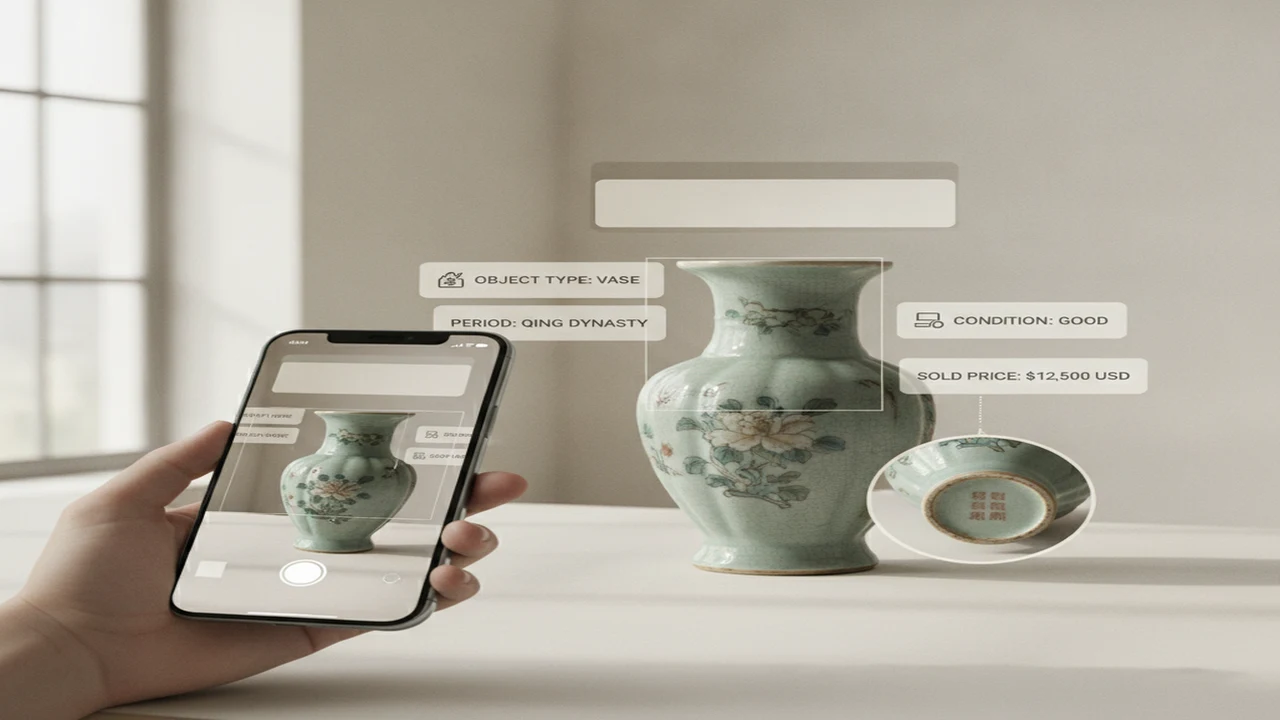
Antique identification on a phone is not one feature. It is a workflow that starts with clear photos, moves through maker-mark research, and ends with comparable sales or professional review. The most useful app depends on whether the immediate job is naming an object, decoding a mark, estimating resale value, or organizing a collection.
This category hub focuses on mobile product decisions: camera onboarding, photo guidance, correction controls, saved results, subscription friction, iOS and Android support, and the quality of the evidence behind a value estimate. For an app-level shortlist, start with the best mobile apps for identifying antiques in 2026.
A polished result screen can still hide weak evidence. Builders and buyers should look for visible reasoning, editable object details, condition fields, comparable-sale dates, and a path to continue research outside the first scan.
Quick answer: Use a photo identifier for the first classification, then verify the suggestion with maker marks, dimensions, materials, condition, and completed-sale records. Choose apps by evidence quality rather than the number of labels generated. For insurance, tax, estate, or high-value sale decisions, move from an automated estimate to a qualified human appraisal.
What does this mean?
Definition: An antique identifier app uses photographs, visual search, catalog data, or expert review to suggest an object's category, maker, period, materials, and possible value range.
Guides in this category
Where does an antique identifier app stop?
A mobile identifier can narrow a broad object into a workable research query. Useful outputs include object type, possible maker, likely production period, material, style, and keywords for catalog or marketplace searches. This can replace a blank search box with a structured starting point.
The boundary appears when visually similar objects differ because of construction, provenance, restoration, regional production, or hidden marks. A photo may show the form of a ceramic vase while missing the weight, glaze texture, repaired rim, or base mark that changes the identification.
An automated value should therefore be read as a research range, not a formal valuation. Our guide to whether a mobile app can appraise an antique explains how identification, price estimation, and professional appraisal differ.
- Identification: What might the object be?
- Attribution: Who may have made it, and when?
- Authentication: Do construction and marks support the claimed identity?
- Valuation: What have relevant examples sold for?
- Formal appraisal: What documented value applies for a stated purpose?
How should you compare antique identification apps?
Start with the first-session funnel. The app should explain why it needs camera or photo-library permission, show which angles to capture, and let the user retake a weak image without restarting. Antique Identifier is one listing-based option centered on photo identification, maker marks, and rough value ranges.
Next, inspect what happens after recognition. Stronger product design exposes the proposed category, descriptive keywords, confidence signals, editable details, and supporting evidence. Saved scans, collection folders, export controls, and clear subscription terms matter for repeat sessions and retention.
| Workflow | Best use | Evidence to expect | Mobile friction to check |
|---|---|---|---|
| Photo identifier | Initial classification | Category, style, material, possible maker | Camera permission and retakes |
| Reverse image search | Finding visual matches | Similar pages and images | Irrelevant lookalikes |
| Marketplace research | Price comparison | Completed or sold listings | Filters and account prompts |
| Reference database | Maker-mark research | Catalog records and mark examples | Paywalls and desktop-first layouts |
| Human appraisal | Higher-stakes valuation | Signed reasoning and stated purpose | Fees, scheduling, and object access |
What photo workflow produces a useful identification?
Use one full-object image, one side or rear view, one base image, and close-ups of signatures, labels, seams, fasteners, damage, and repairs. Shoot in diffuse light against a plain background. Keep the object uncropped in at least one frame so scale and proportions remain visible.
Visual search and appraisal prompts solve different jobs. The Search Antiques by Photo guide covers discovery queries, while Appraise Antiques by Picture adds marks and condition to the value workflow. For product-level trade-offs involving cost, UX, and platform support, use the antique app comparison.
How do you move from identification to a defensible value range?
Turn the proposed identification into a narrow sold-price query. Include the maker or workshop, object type, material, approximate date, dimensions, pattern or model, and important condition terms. The scan-and-sold-prices workflow shows how to separate active asking prices from completed transactions.
Review several relevant sales rather than selecting the highest visible result. Record the sale date, venue, dimensions, condition, buyer premium, and whether the attribution was confirmed or tentative. The How Much Is My Antique Worth guide provides a photo-led comp process, but the final range should still reflect restoration, provenance, regional demand, and selling costs.
Why this category
- Antique apps sit at the intersection of computer vision, marketplace search, reference publishing, and professional services. That makes feature matrices more useful than broad star ratings. A fast scan is valuable only if the user can inspect, correct, save, and verify the output.
- Platform details also shape adoption. An iOS listing such as Antique Identifier : TIQ gives prospective users a place to review current compatibility, privacy disclosures, in-app purchase information, and release notes before install.
- The guides in this category separate discovery from valuation. Use them to choose a mobile workflow, improve capture quality, assess onboarding friction, research maker marks, and decide when marketplace evidence or a human specialist should take over.
Frequently Asked Questions
What is the best type of app for identifying antiques?
The best type depends on the research job. Photo identifiers are useful for initial classification, while maker-mark databases, sold-listing tools, and human appraisal services provide different forms of evidence.
Can a phone photo identify an antique accurately?
A clear photo can produce a useful category or possible attribution, especially when distinctive shapes and marks are visible. Accuracy is harder to judge when objects are restored, unmarked, commonly reproduced, or visually similar across makers.
What does Antique Identifier do?
Antique Identifier is presented as a photo-led tool for suggesting object details, maker information, and rough value ranges. Users should verify important outputs with marks, dimensions, condition notes, and relevant sale records.
Is Antique Identifier : TIQ available for iPhone?
The public Apple App Store listing provides an iOS install route for Antique Identifier : TIQ. Check the current listing for device compatibility, privacy disclosures, pricing, and the latest release notes.
Are antique identifier apps available on Android?
Some antique research and visual-search tools support Android, but platform coverage varies by product and region. Confirm current Google Play availability and required Android version before choosing a workflow.
Can an app tell whether an antique is authentic?
An app may surface authenticity clues such as mark styles, construction details, or visual inconsistencies. Authentication may still require material inspection, provenance research, specialist knowledge, or scientific analysis.
How many photos should I take of an antique?
Capture enough images to document the full form, base, reverse, maker marks, construction details, and damage. Multiple focused views usually produce better research inputs than repeatedly scanning one front-facing image.
Should I use asking prices or sold prices?
Sold prices are generally more useful because they reflect completed transactions rather than seller expectations. Compare objects with similar maker attribution, size, condition, date, and venue, then account for buyer premiums and selling fees.
Can Google Lens identify antiques?
Google Lens can find visually similar objects and pages, which makes it useful for discovery. It does not by itself establish attribution, authenticity, condition, or a defensible value, so its matches should become search leads rather than final answers.
Which marketplaces help with antique price research?
eBay can provide accessible completed-sale filters, while LiveAuctioneers and other auction archives can surface cataloged examples. WorthPoint may also support historical price research, subject to its current access and subscription terms.
Do I need a professional appraisal after using an app?
A professional appraisal is appropriate when the value will support insurance, tax, donation, estate, legal, or high-value transaction decisions. For casual identification or resale research, documented comparable sales may be enough to establish an initial range.
What should an antique app save after each scan?
A useful record includes the original photos, proposed identification, maker marks, dimensions, condition notes, research links, and comparable sales. Collection folders, editable fields, and export options make the result more useful across later sessions.
How can app builders improve antique-scanning onboarding?
Explain camera permission before the operating-system prompt, then show a short capture checklist with examples of useful angles. Let users correct categories, add marks and dimensions, and understand subscription terms before blocking access to the result.