
Antique Apps Compared by UX, Cost, and Platform
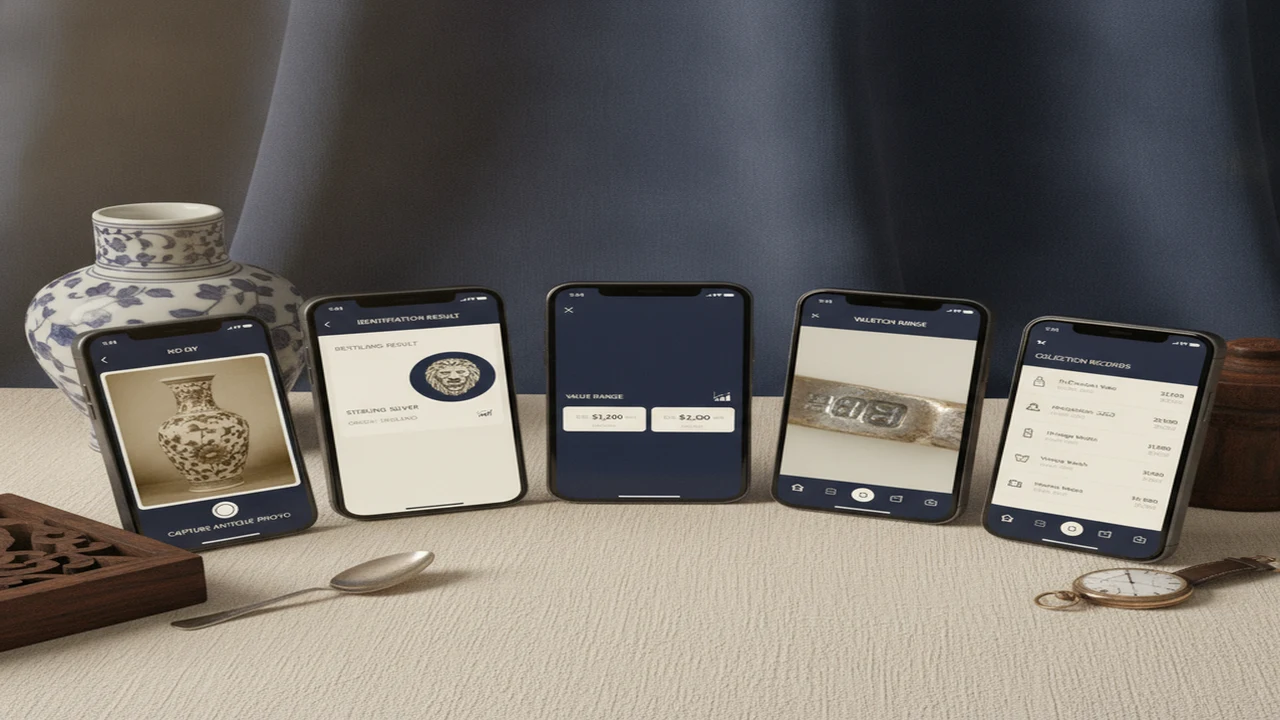
An antique app has two product jobs. It must get a user from install to a useful result without excessive permission or paywall friction, then provide enough evidence to support the next decision.
That second job separates a basic vintage item identifier from a repeat-use research tool. Value ranges, marks, comparables, editable records, and collection storage can matter more than the first object label.
Quick answer: The best antique identifier app depends on what happens after the photo: quick identification, value guidance, authenticity clues, or collection tracking. Compare camera and import flows, result depth, pricing gates, saved records, and platform support. Photo-based estimates can guide research, but uncertain materials, makers, reproductions, and changing results mean they do not replace a qualified appraisal.
What does this mean?
Definition: An antique identifier app uses a photographed or imported image to suggest an object’s category, era, materials, maker, history, comparable items, or estimated market value, often with tools for saving finds into a digital collection.
What should you compare before choosing an antique identifier app?
Map the complete mobile journey: install, onboarding, camera or photo-library permission, image capture, processing state, result screen, saved item, and return session. An attractive scan button is not enough if the result is difficult to interpret or cannot be saved.
Evaluate identification depth, estimated antique value range, authenticity clues, collection tools, pricing gates, and platform availability separately. An app can produce detailed historical context while offering limited collection management, or provide fast capture while placing useful output behind a subscription.
An AI antique identifier suggests candidates from image and reference data. An antique price guide focuses on values, marketplace-comparable search surfaces similar listings or sales, and a professional appraisal applies specialist judgment to a specific object and purpose.
Google Lens can support broad visual search, while WorthPoint is oriented toward pricing and reference research. Either can complement a dedicated antique identifier app, but neither automatically replaces structured result fields, category prompts, or a saved collection workflow.
- Check whether the value proposition is visible before account creation.
- Look for camera guidance and photo-library import.
- Inspect what evidence appears with the suggested identity.
- Confirm which outputs remain available without payment.
- Verify whether records can be edited, searched, or exported.
How do the leading antique apps compare by UX, cost, and platform?
The supplied iOS listing for Antique Identifier positions the app around photo identification, value ranges, authenticity clues, and saved finds. The matrix compares those listing claims with four competing products.
Curio emphasizes craftsmanship information and visual item matches, making the result screen part of a broader comparison loop. Relic takes a more compact record approach, turning one photo into identity, era, material, origin, condition, and value fields.
AntiqSnap combines scan-led identification with learning content and collection organization. Antique Identifier By Picture focuses on period and value suggestions plus collection storage. These positions describe public materials, not measured speed or identification accuracy.
Which app offers the lowest-friction photo identification flow?
The ideal flow opens with a clear reason to scan, requests camera permission only when the camera is selected, provides framing guidance, and offers gallery import for existing photos. During processing, a visible progress state should reassure the user that the session has not stalled.
Relic’s one-photo positioning can reduce perceived effort. Curio’s visual item matches may create a useful follow-up loop when the first result needs comparison against related objects. AntiqSnap and Antique Identifier By Picture are also scan-first products, although their public notes do not establish relative speed or permission behavior.
Antique Identifier TIQ is an option for users who want to identify antiques by photo and continue into value, history, authenticity clues, and collection saving. Whatever the app, the result screen should end with an obvious save, refine, add-photo, or rescan action rather than a dead end.
- Request camera access at the moment of use.
- Offer photo-library import as an equal path.
- Explain how to capture marks, bases, and signatures.
- Show a readable progress state.
- Make the next action visible on the result screen.
Which features help users move from identification to a value decision?
A useful result should separate identity from supporting evidence. Look for estimated age or period, likely materials, maker signatures, marks and hallmarks, condition prompts, comparable objects, and an antique market value range with an understandable basis.
Category evidence matters. Antique furniture identification may depend on joinery, hardware, wood, and restoration. A porcelain and ceramics identifier needs a clear backstamp. Antique silver identification depends on close hallmark photographs, while an antique watch value can change with movement, reference, originality, and condition.
Curio’s visual item matches can support comparable-object research. Relic’s compact era, material, origin, and condition record can help document why a candidate identification was considered. Antique Identifier : TIQ lists history, context, maker or hallmark research, and antique authenticity clues among its result-oriented uses.
An antique value checker is a research aid, not a formal valuation. The market is increasingly organized around current listings and realized sales rather than a single static guide, a workflow also reflected in this overview of mobile appraisal tools. For a repeatable image and pricing workflow, see how to photograph an antique and check sold prices.
How do pricing gates affect activation and retention?
Pricing is part of onboarding. A scan limit, immediate paywall, subscription prompt, advertising load, or locked collection feature can determine whether a new user reaches the first useful result after install.
Relic’s public positioning requires a subscription for its identification, history, comparison, and collection functions. AntiqSnap lists unlimited premium scans as a paid proposition. Reviews of Antique Identifier By Picture mention advertising, but that feedback should not be read as a universal session experience.
Before subscribing, inspect the live store listing for the free scan allowance, trial terms, renewal period, cancellation path, restore-purchase support, and access to saved records after a plan ends. Consider what a mobile appraisal claim can realistically provide before deciding whether a recurring plan matches the research job.
Collection organization and scan history can support Day-7 retention by giving users a reason to return. Revisit prompts are useful when they surface saved research, missing photos, or records needing verification, rather than simply opening another paywall.
Which platform and collection features matter after the first scan?
Verify the current iOS or Android listing, minimum OS version, device compatibility, account requirements, cloud sync, export options, and privacy disclosure before installing. Platform labels and feature parity can change independently.
Antique Identifier : TIQ has the supplied iOS App Store listing. That does not establish Android availability or absence. Curio is documented for iOS and Android in the supplied notes, while platform support for AntiqSnap, Relic, and Antique Identifier By Picture should be confirmed on their current listings.
For repeat sessions, AntiqSnap promotes a digital collection organizer, Antique Identifier By Picture lists an antique collection manager, and Relic structures each result as an item record. Useful fields include photos, title, category, estimated era, materials, condition, value range, acquisition details, and private notes.
Searchable collections, editable records, export, and cross-device continuity can improve long-term utility, but they should be verified when the listing does not document them. Also check whether account creation is required before the first record can be saved or synchronized.
Which antique app fits each type of user?
For visual-match research, Curio is positioned around similar items, craftsmanship information, and contextual summaries. AntiqSnap fits users interested in collector learning articles and a digital collection organizer, provided its premium scan model fits the expected scan volume.
Relic suits users who prefer a concise one-photo record covering identity, era, material, origin, condition, and estimated value, and who accept subscription access. Antique Identifier By Picture fits users seeking period and value suggestions with collection storage.
Antique Identifier TIQ is an iOS option for users seeking photo identification, an antique market value range, authenticity context, history, and saved finds in one workflow. There is no universal best app to identify antiques because the right product depends on the evidence and follow-up tools required.
Use a simple selection rule: confirm the platform, inspect live pricing, review permission and privacy details, try a representative low-stakes object, and verify important results independently. For a broader category shortlist, see the best mobile apps for identifying antiques.
Comparison
| App | Platform listed | Photo-input UX | Identification and value outputs | Collection workflow | Cost or access gate | Best fit |
|---|---|---|---|---|---|---|
| Antique Identifier : TIQ | iOS listing supplied | Photo-led identification | Identity, value range, history, authenticity clues, marks or maker context | Save identified finds | Live pricing and in-app purchase details should be checked | iOS users wanting identification, value context, and saved finds |
| Curio - Antique Identifier | iOS and Android in supplied notes | Photograph an object and review similar items | Estimated antique value range, background, craftsmanship information, visual item matches | Not clearly documented in supplied notes | Subscription model with limited free entry reported | Visual-match and craftsmanship research |
| AntiqSnap: Antique Identifier | Verify current listing | Snap antique identification | Identity, pricing guidance, condition suggestions | Digital collection organizer and value tracking | Premium proposition lists unlimited scans; price not supplied | Learning content and collection organization |
| Antique Identifier - Relic | Verify current listing | One-photo antique scan | Identity, era, materials, condition, origin, estimated USD range | Compact item records | Subscription required for listed core functions | Concise historical records |
| Antique Identifier By Picture | Verify current listing | Scan or import a picture | Quick antique value estimate, identity, material, age, period identification | Antique collection manager | Cost not clearly supplied; reviews mention advertising | Period and value suggestions with storage |
Limitations
Photo results can vary with lighting, angle, scale, background, hidden marks, restoration, reproductions, mixed materials, and incomplete provenance. Material, wood, maker, region, age, and reproduction judgments may be incorrect or inconsistent between scans.
Curio states that estimates based on historical information and comparable objects are not certified appraisals. Reviews of AntiqSnap report some incorrect wood or material suggestions and difficulty separating reproductions from genuine antiques. Reviews of Antique Identifier By Picture mention changing results, occasional maker or region errors, and advertising.
Listed features, subscriptions, scan allowances, advertising, collection tools, and platform support may change after August 6, 2026. A capability not mentioned publicly is not proven absent.
Use multiple overall photographs, side and base views, scale references, and close-ups of marks. Cross-check independent sold-price sources, and consult an appropriate specialist for insurance, estate, tax, authenticity, or high-value sale decisions.
Frequently Asked Questions
Can a photo app accurately identify an antique?
It can suggest likely identities based on visible evidence and reference data. Results depend on image quality, category, visible marks, condition, and whether the object is restored or reproduced, so important findings need independent verification.
Is Antique Identifier TIQ available on iPhone?
Yes. Antique Identifier TIQ has the supplied iOS App Store listing. The available materials do not establish whether equivalent Android support exists.
Can Antique Identifier TIQ appraise antiques by picture?
The app is positioned around photo identification, estimated market value ranges, history, authenticity clues, and collection saving. A value range is research guidance, not a certified appraisal or guaranteed sale price.
What photos produce better antique identification results?
Capture an overall view, sides, base, scale, damage, labels, signatures, hallmarks, and construction details. Use indirect natural light, avoid glare, keep the object sharp, and add separate close-ups rather than relying on one distant image.
Can an antique identifier app recognize marks and hallmarks?
Close-up images can help an app suggest candidates for signatures, hallmarks, and backstamps. Worn, partial, copied, altered, or forged marks require comparison with trusted references and specialist verification.
Are antique value estimates the same as professional appraisals?
No. App estimates are research inputs based on inferred identity and available comparisons. Use a qualified specialist for high-value sales, insurance schedules, estates, taxes, formal authenticity questions, or disputed ownership and condition.
Should I use Google Lens, WorthPoint, or an antique identifier app?
Google Lens provides broad visual search, WorthPoint supports deeper pricing and reference research, and dedicated apps offer structured identification or collection workflows. Many users combine an identifier with independent sold-price research.