
How to Scan Pokemon Cards and Check Their Value
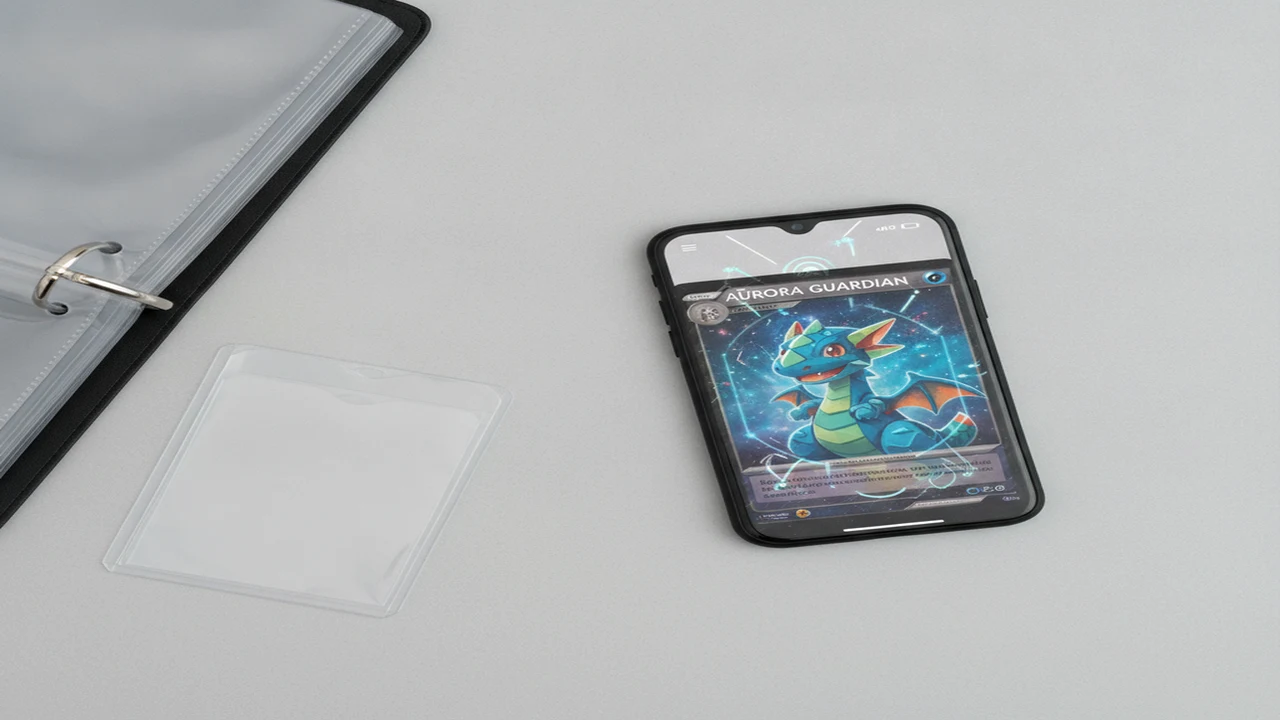
Scanning is really two product tasks: camera-based card identification and price matching. The first determines which printing is in front of the camera. The second connects that printing to raw market data, graded sales or regional listings. A useful Pokemon card price checker keeps those tasks separate so that a confident image match is not mistaken for a guaranteed valuation.
The workflow matters because visually similar cards can carry different prices. Before acting on an estimate, verify the card and inspect the evidence behind the number. If you are still choosing a tool, our guide to the best Pokemon card scanner apps for iOS and Android covers the broader app landscape.
Quick answer: Use a Pokemon card scanner to photograph the card, confirm its collector number, set and variant, then compare raw or graded prices with recent sold listings. Treat the first result as an estimate. Condition, language, edition, grading company, region and sale date can materially change the Pokemon card market value.
What do you need before scanning a Pokemon card?
Use bright, indirect light and place the card flat on a plain, contrasting background. Clean the phone lens, hold the camera parallel to the card and leave a small border around every edge. Direct light can create holo glare over the name, artwork or collector number.
The app will usually request camera permission during onboarding. Grant access only when you are ready to scan, then check the operating system settings if the preview remains blank. Remove reflective sleeves when safe to do so, because glare, cloudy plastic and cropped corners increase correction effort.
- Keep the full card inside the frame.
- Avoid fingers covering the set symbol or collector number.
- Use the rear camera for better focus.
- Scan one card at a time unless the app explicitly supports multi-card scanning.
How do you scan Pokemon cards for value step by step?
A TCG card scanner should offer a short path from camera permission to a confirmed card record. Do not accept the first suggestion solely because the artwork looks right. The printed identifiers are more reliable than the headline image or price.
- Prepare: Place the card under indirect light on a plain surface.
- Frame: Align all four edges inside the camera guide without excessive empty space.
- Capture: Hold the phone steady and photograph the front of the card.
- Match: Review the scanner's suggested name, set and artwork.
- Verify: Check the collector number, language, rarity and foil treatment.
- Compare: Open recent sold evidence and relevant marketplace comparisons.
- Adjust: Select the closest raw condition or the exact grading company and grade.
- Save: Add the confirmed printing, quantity and acquisition cost to the collection.
- Monitor: Refresh prices periodically instead of rescanning unchanged cards every session.
How can you confirm that the scanner found the correct card?
Start with the collector number, such as a card number followed by the set size. Then compare the set symbol, rarity mark, artwork, promo stamp, first-edition marking and foil pattern. Reverse holo, standard holo and non-holo copies may share most visible design elements while producing different market matches.
Japanese cards require extra care because set numbering, language and regional releases may not align with the English equivalent. A Japanese Pokemon card scanner should return the Japanese printing rather than substitute a visually similar English card. Reprints, prize cards and alternate artwork are other common mismatch cases.
If repeated corrections are common, review how Pokemon card scanner accuracy should be evaluated. Identification confidence describes the match, not the certainty of its price.
How should you check a Pokemon card's market value?
Separate asking prices from completed transactions. An active listing shows what a seller wants, while real eBay sold card prices indicate what buyers recently paid. Filter sold results by the exact printing, language, condition and grading status, and give more weight to recent comparable sales than to an isolated high result.
Use a TCGPlayer price comparison for raw North American market context and a Cardmarket price comparison for European pricing. Currency, shipping, taxes and regional demand can make those figures diverge. MonPrice Collector & Scanner is another contextual option for daily TCG prices, CardMarket pricing and batch scanner compatibility, although its positioning emphasizes estimated updates more than sold-listing or graded-value evidence.
A market value is better expressed as a range. Exclude lots, autographed copies, obvious errors and listings with unrelated extras. If sales are sparse, widen the date range and lower confidence rather than treating an asking price as a completed-sale equivalent.
How do raw and graded Pokemon card values differ?
Raw cards are commonly grouped into condition bands such as near mint, lightly played, moderately played, heavily played and damaged. Evaluate corners, edges, surface, creases, dents and centering. A front photograph may miss scratches, pressure marks or back-edge wear, so condition selection should remain editable after scanning.
PSA graded card values, CGC graded card values and BGS graded card values must be compared within the same company and numerical grade. A PSA 10 sale is not evidence that an ungraded copy will receive a 10. Certification fees, turnaround time and the risk of a lower grade also affect whether grading is economically sensible.
AI card pre-grading can help sort obvious low-grade cards from cleaner candidates, but it is triage rather than certification. Card Value Scanner can provide graded context alongside a photo match, while the owner still needs to inspect the physical card and verify comparable sales.
Which scanner features matter for repeated collection checks?
The best TCG scanner app is the one that reduces correction work across repeated sessions. Instant camera card identification helps at intake, but exact variant controls and visible pricing sources matter more when a collection includes promos, foils or foreign-language cards.
The feature matrix below connects each capability to a practical decision rule. For more product-level detail, see Pokemon scanner apps compared by the features that matter.
How can you save scans and track a Pokemon card collection?
After confirming a scan, save the exact printing rather than only the character name. Useful records include quantity, condition, language, acquisition cost, purchase date, grading status and storage location. Folders can separate personal sets, sale inventory, grading candidates and trade stock.
A Pokemon card collection tracker should also handle duplicate counts, price refreshes, watchlists and set completion. Collection totals are more useful when users can inspect the cards behind a change instead of seeing only a portfolio headline. Price alerts should identify the source and threshold that triggered the notification.
For a combined workflow, online card value checker supports photo identification, market-price context, graded comparisons and collection totals. Test a small batch first to confirm that its listing, camera-permission flow and correction controls fit your normal session.
When should you rescan or research a card manually?
Rescan when the collector number is blurred, the app returns several plausible variants or the detected language is wrong. Manual research is preferable for unusual promos, foreign-language releases, misprints, error cards, counterfeit concerns, heavy wear and cards with little recent sales history.
Use a second angle for reflective surfaces, but do not expect repeated photos to resolve missing market evidence. Card Value Scanner can remain the primary identification and valuation surface, while TCG collection tracker can serve as a companion for continued checks. A two-tool workflow is reasonable when one product is faster for intake and another view is better for follow-up.
What are the limitations of Pokemon card scanner apps?
Scanner performance has two distinct confidence levels. Identification confidence measures whether the app found the correct printing, while valuation confidence measures whether enough comparable market evidence exists. A high-confidence match can still have a weak price estimate.
- Camera recognition can confuse reprints, alternate artwork, foil treatments and cards with obscured collector numbers.
- Real-time Pokemon card prices may lag thin markets or rely on estimates rather than completed transactions.
- One photograph cannot reliably capture scratches, dents, edge wear, back condition and centering.
- AI card pre-grading does not replace authentication or an official PSA, CGC or BGS grade.
- eBay, TCGPlayer and Cardmarket may represent different regions, currencies and buyer demand.
- Japanese cards, promos, misprints and suspected counterfeits often require manual research.
- Collection totals exclude some combination of selling fees, shipping, taxes and limited liquidity.
What is the practical verdict for scanning and valuing Pokemon cards?
Choose for the full workflow rather than the fastest camera animation. Exact matches, visible sold evidence, graded context and collection tracking reduce the risk of making a sale or grading decision from one unsupported estimate.
Comparison
| Scanner capability | What to verify | Why it affects value | Decision rule |
|---|---|---|---|
| Instant camera identification | Name, artwork and collector number | A fast wrong match creates false confidence | Accept only after checking printed identifiers |
| Exact set and variant matching | Set, rarity, promo and foil treatment | Similar printings can have different demand | Require manual variant correction |
| Recent sold-price evidence | Sale date, condition and exact item | Completed sales are stronger than asking prices | Prefer several recent comparable sales |
| Raw condition context | Front, back, edges, surface and centering | Wear changes the relevant comparison group | Use a range when condition is uncertain |
| PSA, CGC and BGS comparisons | Company, grade and certification status | Slab markets are not interchangeable | Compare the same grader and grade |
| Japanese card support | Language, regional set and numbering | English substitutes may be the wrong printing | Reject translated artwork-only matches |
| Multi-card scanning | Per-card confirmation and duplicate handling | Batch errors compound quickly | Use only when corrections remain visible |
| Collection totals and price alerts | Price source, refresh date and quantities | Stale or duplicated records distort totals | Audit large changes at card level |
Limitations
Even the best Pokemon card scanner app cannot authenticate a card, guarantee that it is genuine or predict an official grading result. Authentication requires physical inspection and, when appropriate, an established grading or authentication service.
Treat collection value as directional rather than immediately realizable cash. Selling fees, shipping, taxes, negotiation, market depth and the time required to find buyers can materially reduce the amount received.
Frequently Asked Questions
Can a phone camera scan Pokemon cards accurately?
A phone camera can identify many Pokemon cards accurately when the full card, collector number and set details are clearly visible. Glare, sleeves, reprints and similar variants still require manual confirmation.
Does Card Value Scanner show real eBay sold card prices?
Card Value Scanner provides sold-price context for checking market estimates. Users should verify that each comparable sale matches the card's printing, condition, language and date.
Can Card Value Scanner compare PSA, CGC and BGS graded values?
Card Value Scanner provides graded-value context across PSA, CGC and BGS. Each result should be compared within the same grading company and numerical grade.
Can Card Value Scanner identify Japanese Pokemon cards?
Card Value Scanner can be used to identify Japanese Pokemon cards, but users should confirm the regional set, collector number and language. Visually similar English printings are not equivalent matches.
Does Card Value Scanner work as a Pokemon card collection tracker?
Card Value Scanner supports collection totals alongside scanned card records. Accurate totals depend on correct quantities, variants, conditions and refreshed prices.
Can Card Value Scanner estimate a card's grade from a photo?
Card Value Scanner can provide AI card pre-grading context as a sorting aid. The estimate is not authentication and does not guarantee a PSA, CGC or BGS result.
How does TCG App fit into a repeated card-checking workflow?
TCG App can complement Card Value Scanner during repeated checks and follow-up sessions. The pair can support a workflow that separates fast intake from later valuation review.
Why does a scanner price differ from an eBay listing?
Card Value Scanner may use a market estimate or comparable-sale context that differs from one active eBay asking price. Condition, variant, region, sale date, fees and listing type can explain the gap.